
Catholic Therapy Center

A Healthier, Holy Mindset for the Sacrament of Reconciliation
Have you ever been in line for confession and noticed a few restless souls glancing at their watches? Maybe even a frustrated sigh or two from those wondering why the little old lady ahead of them has been in there for 40 minutes?
It’s a familiar scene — and it captures something deeper: how many Catholics approach confession with anxiety, dread, or a subtle sense of self-contempt. We shuffle into the confessional like we’re heading to the DMV or a courtroom, hoping the divine Judge might go easy on us if we say the right words.
But that’s not what God desires.
If your mindset is, “I have to confess so I can stop feeling guilty,” or “I just need to get this over with,” you’re already missing the heart of the sacrament. Confession isn’t about punishment or performance. It’s about relationship — about love, mercy, and restoration.
“Confession is an act of honesty and courage—an act of entrusting ourselves, beyond sin, to the mercy of a loving and forgiving God.”
— St. John Paul II
When we step into that confessional, we’re not entering a legal transaction. We’re walking into an encounter — a loving embrace from the Father who runs to meet us.

A Loving Encounter, Not a Legal Transaction
Many Catholics see confession as a spiritual ledger: I say my sins, God erases the debt.
But the goal of confession isn’t bookkeeping — it’s healing.
As a therapist and a Catholic, I’ve seen how people’s image of God shapes their relationship with Him. If we’ve known mostly critical or distant authority figures, we may imagine God that way too — stern, disappointed, waiting for us to fail again.
But mercy is not God’s reluctant duty; it’s His delight.
“God never tires of forgiving us; we are the ones who tire of seeking His mercy.”
— Pope Francis
Confession is not a cold exchange of words — it’s a warm meeting of hearts. It’s where our wounds are seen, not with disgust, but with tenderness.
Confession Is Not About Self-Punishment
Many of us unconsciously treat confession like a self-imposed penance. We go in rehearsing our failures, anxious about perfect wording, or even re-confessing past sins that have already been forgiven — as if God didn’t really mean it the first time.
But confession is not where you prove your sorrow — it’s where you receive love.
We are not there to beat ourselves up but to let grace lift us up.
When you kneel before Christ in the confessional, you are not entering a courtroom — you’re stepping into a hospital for the soul.
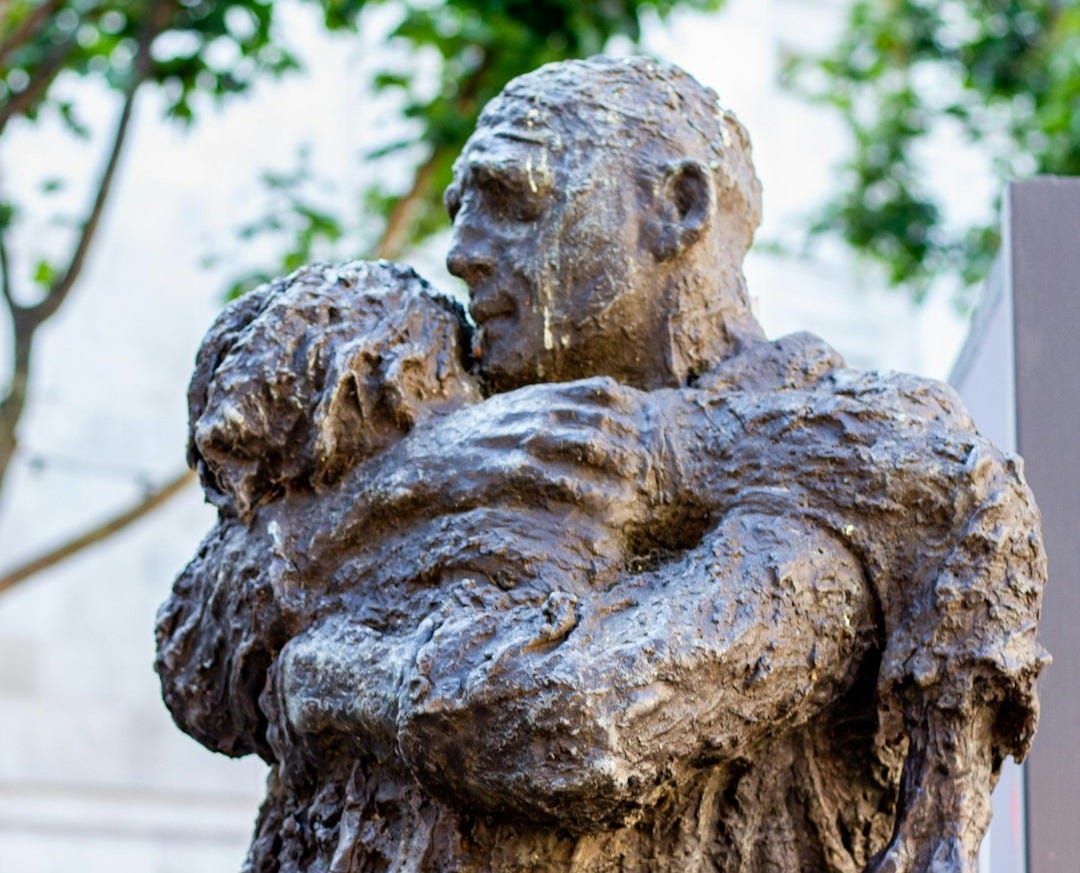
Returning to the Father
Think of the prodigal son. On his way home, he’s rehearsing his confession speech — “Father, I am not worthy…” — but before he even gets the words out, his father runs to him, wraps him in an embrace, and restores him to dignity.
That’s confession.
We don’t have to earn mercy. We just have to turn back toward Love.
“While he was still a long way off, his father caught sight of him, and was filled with compassion.”
— Luke 15:20
Confession is not a test of your guilt, or even a formula to demonstrate a proper level of remorse. Confession is a homecoming of your heart to the one who loves you.
A Therapist’s Reflection on Healing and Mercy
In therapy, healing happens when people finally feel safe enough to bring their hidden parts into the light. They allow themselves to be fully seen, even risking judgment with vulnerability. The same is true in confession and even more profound — because here, the light is Christ Himself.
The priest is in persona Christi — not as a judge with a gavel, but as a physician with healing in his hands.
Confession is not meant to shame the sinner but to restore the beloved.
Black-and-White Thinking & the Spousal Heart
While working with many Catholics battling addiction — especially pornography — I’ve seen a recurring mindset that goes something like this:
“If I’ve already committed mortal sin, it doesn’t matter what else I do until I get to confession.”
This is a common lie that can destroy hope. Its a lie built on forgetting that our faith is all about relationship. God isn’t an impersonal accountant, He is a lover awaiting the return of his beloved.
It’s like a husband who has been unfaithful saying, “Well, I might as well cheat a few more times before apologizing this weekend.” We know that’s absurd. Why? Because love is relational. Every choice matters.
Yet at the same time, we can often go into confession thinking its about resetting a scoreboard. In reality its all about reconciling a relationship. Its in the name. Reconciliation means to restore friendship, and it doesn’t stop there.
Scripture and liturgy are full of spousal imagery. The Church is the Bride; Christ is the Bridegroom. Every Mass is a wedding feast, every confession a moment of reunion.
When you walk into confession, you’re not entering a courtroom — you’re preparing to walk down the aisle again.
“Let us rejoice and be glad and give Him glory, for the marriage of the Lamb has come.”
— Revelation 19:7
Confession is a reconciliation of real relationship, and Eucharist the consummation of this relationship. Amazingly, even the desire to confess is already evidence that the Holy Spirit is moving in your heart. You are never the one who starts the journey — God is. He calls you back the second you fall, out of His perfect love for you.
The Danger of Self-Focus and the Beauty of Divine Mercy
Fr. Jacques Philippe reminds us that when we fall, the devil tempts us not only to sin, but to despair. The evil one whispers, “You’re too far gone. You’re unworthy. God must be tired of you.”
But God isn’t shocked by our weakness. He’s waiting to raise us up, not to lecture us. We are usually the shocked one’s when we sin, because its a reality check to our ego.
We have to remember that every saint fell and got back up — not because they were strong, but because they trusted God’s mercy more than their shame. They didn’t stay fixated on their wrong doing, or live in fear of going to hell. They fixed their eyes on Christ and trusted in his mercy right away. Mercy doesn’t just meet you where you are — it always moves you forward.
“Where sin increased, grace overflowed all the more.”
— Romans 5:20
Borrowing from Our Protestant Brothers & Sisters
When it comes to understanding God’s mercy, we Catholics can actually learn something powerful from our Protestant brothers and sisters.
Many Protestants live with a deep awareness that the very moment they sin, they can turn to God and ask for forgiveness — and that mercy is immediately available to them. They don’t wait until Sunday service or until they “feel” worthy again. They know God’s love is always ready to forgive and restore.
This is something we, as Catholics, should remember and reclaim. Even though we have the beautiful Sacrament of Reconciliation, we too can — and should — cry out for mercy the instant we fall. God is always willing to forgive.
This awareness doesn’t replace confession — it transforms how we understand it. Confession becomes the tangible re-entry into the Body of Christ, the visible moment when the forgiveness already available to us through grace is sealed and celebrated within the Church. Reconciliation is experiential, human, tangible.
Every sin distances us from the Body; every confession draws us back into its embrace.
Confession, then, isn’t the start of mercy — it’s the completion of reconciliation. It’s where we are not only forgiven, but brought back into communion with the family of faith, restored to our place in the living Body of Christ, ready to receive the amazing gift of the Eucharist, Christ Himself.
Dead to Sin, Identity in Christ
St. Paul reminds us of a profound truth:
“You must think of yourselves as being dead to sin and living for God in Christ Jesus.”
— Romans 6:11
We are no longer slaves to sin but children of God, heirs to His kingdom (Romans 8:14–17).
Confession is not merely a cleansing; it’s a reclaiming — a renewal of our identity in Christ. When we say the Act of Contrition, we’re not just expressing remorse — we’re proclaiming belief that grace can transform us, that holiness is possible.
We are not doomed to repeat sin forever. Grace makes change possible. The saints — and especially Mary — are living proof that through cooperation with grace, the human heart can truly say no to sin and yes to love.
Even psychology affirms this mystery. Through neuroplasticity, our brains are rewired by repetition — and grace works the same way. Every “yes” to virtue strengthens the pathways of freedom. Each confession is an act of spiritual renewal that reaffirms the truth:
I am not my sin. I am beloved. I am free.
“So whoever is in Christ is a new creation: the old things have passed away; behold, new things have come.”
— 2 Corinthians 5:17
Feelings vs. Faith: Trusting the Objective Grace of the Sacrament
We also have to remember: the Sacrament of Reconciliation is not dependent on how we feel.
Yes, it’s good to feel contrite. But even when our emotions lag behind — even when we walk out anxious, unsure, or “unchanged” — the forgiveness is real.
We don’t measure grace by our feelings. We trust the promise of God.
“For we walk by faith, not by sight.”
— 2 Corinthians 5:7
Good theology always leads to good mental health.
Don’t confuse the silence or even negativity of emotion with the absence of mercy. Grace is working, even when it feels quiet. God’s mercy is bigger than our emotional experiences around it. Forming our minds and our hearts with the heart of the Church, His Bride, further helps straighten the distortions of our feelings.
Don’t Go to Confession This Way…
Don’t go as a defendant trying to avoid punishment.
Don’t go as a perfectionist trying to earn forgiveness.
Don’t go as someone begging for scraps of mercy.
Go as a beloved child running home.
Go as the Bride returning to her Bridegroom.
Go as one already being pursued by Love.
Confession is not a courtroom — it’s a wedding rehearsal for Heaven.
Reflection Questions
- When I think of confession, what emotion first arises — fear, relief, love, or shame?
- Do I see God as a Judge or as a loving Father and Bridegroom?
- How might I bring my anxious or perfectionistic parts to confession, allowing God to meet them with tenderness?
Scripture for Prayer
“Let us confidently approach the throne of grace to receive mercy and to find grace for timely help.”
— Hebrews 4:16“The Lord is gracious and merciful, slow to anger and abounding in steadfast love.”
— Psalm 145:8
Closing Invitation
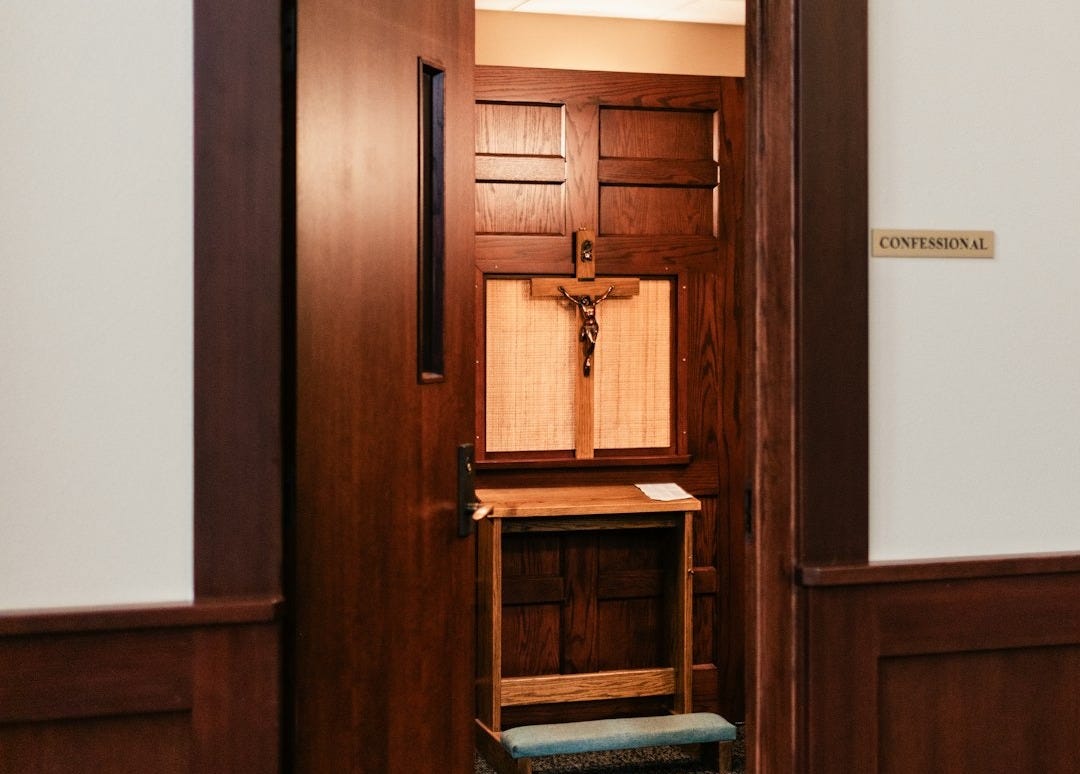
As you prepare for your next confession, let the Holy Spirit renew your mindset: this is not a trip to the principal’s office — it’s a homecoming.
Even when repentance feels dry, or when anxiety lingers afterward, the mercy of God is already poured out.
“Christ instituted the sacrament of Penance for all sinful members of His Church … to offer them a new possibility to convert and recover the grace of justification.”
— CCC 1446
Run to Him, not away from Him.
Trust the sacrament’s power more than your emotions.
Because no matter how you feel, the truth remains:
you are forgiven, you are loved, and Heaven rejoices.
Resources for Reflection
- Catechism of the Catholic Church §§ 1422–1498 (The Sacrament of Penance and Reconciliation)
- Romans 6:11; 8:14–17; 2 Corinthians 5:17; Luke 15:11–32
- Fr. Jacques Philippe, “Searching for and Maintaining Peace”
- Pope Francis, “The Name of God Is Mercy”
- St. John Paul II, “Reconciliation and Penance” (Apostolic Exhortation, 1984)
Thanks for reading! This post is public so feel free to share it.
©️ 2017-2026 The Catholic Therapy Center, A Marriage and Family Therapy Professional Corporation | Site Credit | Privacy Policy | Good Faith Estimate